

News Story


Nov 2026 / News
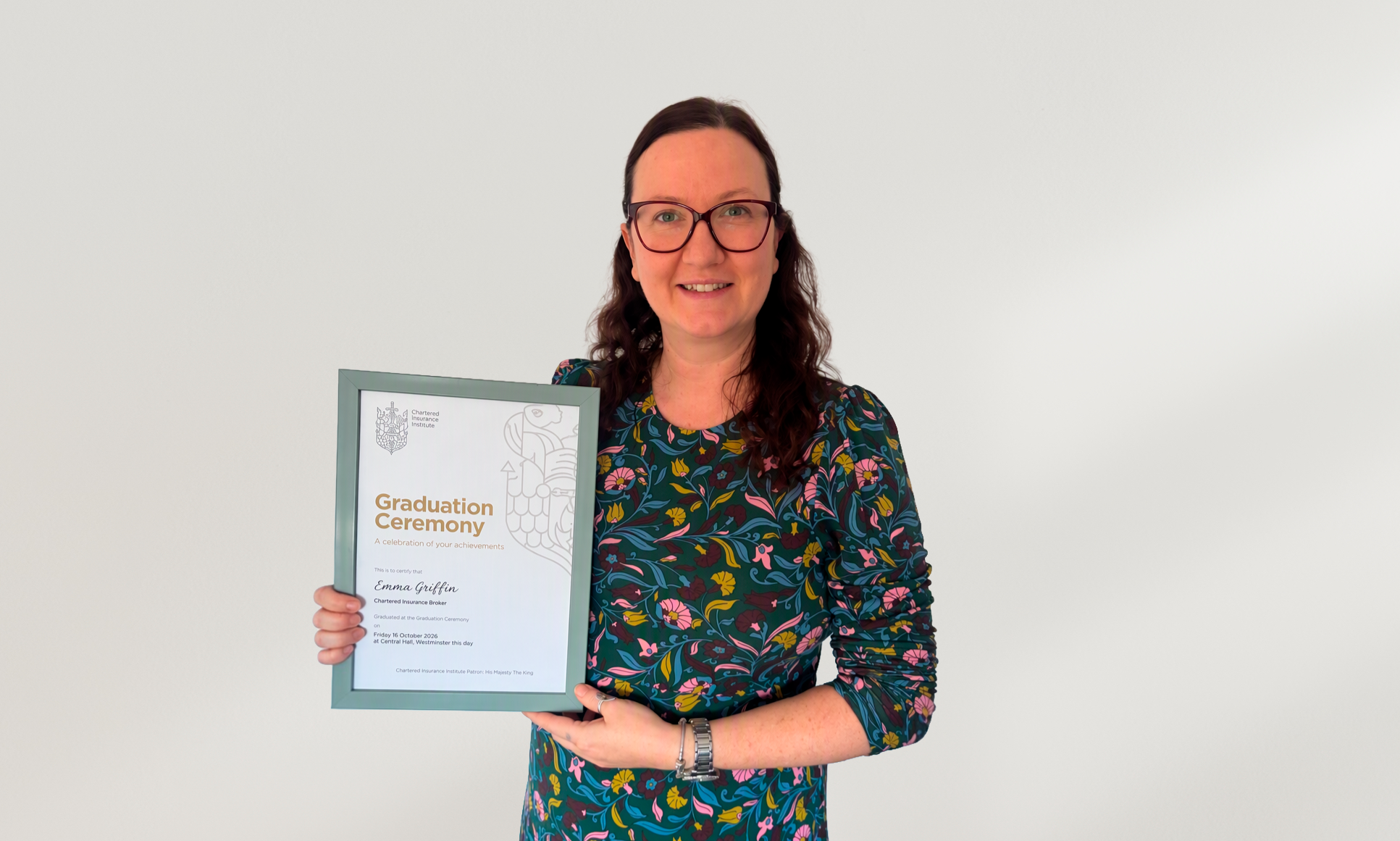
A training advisor has recently achieved Chartered Insurance Broker status after ten years of training in the sector.
Emma Griffin began her career in insurance in 2016 when she was looking for a new challenge and an opportunity to build her technical knowledge. Throughout her journey, which last week found her heading to Westminster as a recent qualification graduate, has seen her progress from learner to advisor. This experience of learning on the job continues to be central to how she supports learners today.
After many years working in management roles across hospitality and retail, Emma started a new career as an insurance broker in April 2016.
“Back then I was excited for a new challenge, soaking up every bit of detail my trainers shared, asking far too many questions to gather my own understanding,” Emma explained. “I was offered the opportunity to undertake technical training and a qualification, and I attribute this nurtured start as the reason I was hooked on insurance.”
Having entered the industry later in her career, Emma wanted to gain a recognised qualification that would demonstrate her technical knowledge and give clients confidence in the advice she provided.
“Working and studying at the same time really suited me because I could learn something through my qualifications and then see how it applied in practice,” she said. “Equally, situations I experienced at work gave context to what I was studying. I developed a much broader technical understanding and became more confident in my own judgement and decision-making.”
This combination of theory and practical experience helped Emma progress into a Corporate Account Handler role while she continued her professional development through increasingly advanced qualifications.
“The journey from my first exam in Insurance, Legal and Regulatory through to completing my last exam on Christmas Eve is a tremendous accomplishment,” Emma said.
Her studies covered insurance law, advanced claims, underwriting, insurance broking, marketing insurance products and services, and risk management. Alongside her examinations, Emma completed assignments totalling more than 50,000 words.
Emma joined ALS, now part of ACT, after working in a line management role at an insurance services business, where she had already been supporting learners. Moving into training and development gave her the opportunity to bring together her experience with her enthusiasm for helping others succeed.
“I like how things have come full circle in the last decade and I can now give back. I like supporting others to achieve their own career ambitions and build on their existing skills,” she said.
Transitioning from learner to Training Advisor meant developing new skills of her own, including achieving her TAQA qualification for the assessing element of her role while completing the final modules of her advanced diploma.
“Moving from being a learner to supporting learners felt like a natural progression. I was now able to put my technical knowledge into workshop deliveries and my first-hand experience into assessing on the job criteria.”
And having experienced work-based learning herself, Emma understands the pressures learners can face when balancing their studies with busy working lives.
“I’ve held line manager roles in a few different sectors and always find that I have a better understanding of what I’m asking from others if I’ve also been down that path.
“Having experienced work-based learning myself I can recognise when times are tough, resources are low, workload is heavy and I can guide the learners for the quick wins and reassure them that they can get through it.”
Earlier this month, Emma’s hard work culminated in a graduation ceremony at Westminster, celebrating her attainment of Chartered Insurance Broker status.
“It was a massive personal and professional milestone,” she explained. “It gave me an opportunity to reflect on how far I’ve come.”
Asked if she had any advice to anyone considering a work-based qualification, Emma said: “I’d say give it a go. A work-based qualification is a rewarding experience; it recognises that learning doesn’t just take place in a classroom or a book. The theory is great for technical knowledge, applying it is where learners develop understanding and confidence.”

